How to Tell Your Dog Really Loves You

Kasey Dirga • November 25, 2025

🐶 Is It Really Puppy Love?


If you’ve ever looked at your dog and felt a wave of warmth you can’t quite name, congratulations — you already speak the language. Dogs love you in quiet ways: in tail swishes, in forehead touches, in how they follow you room to room even when nothing is happening and you’re just folding laundry or answering emails.


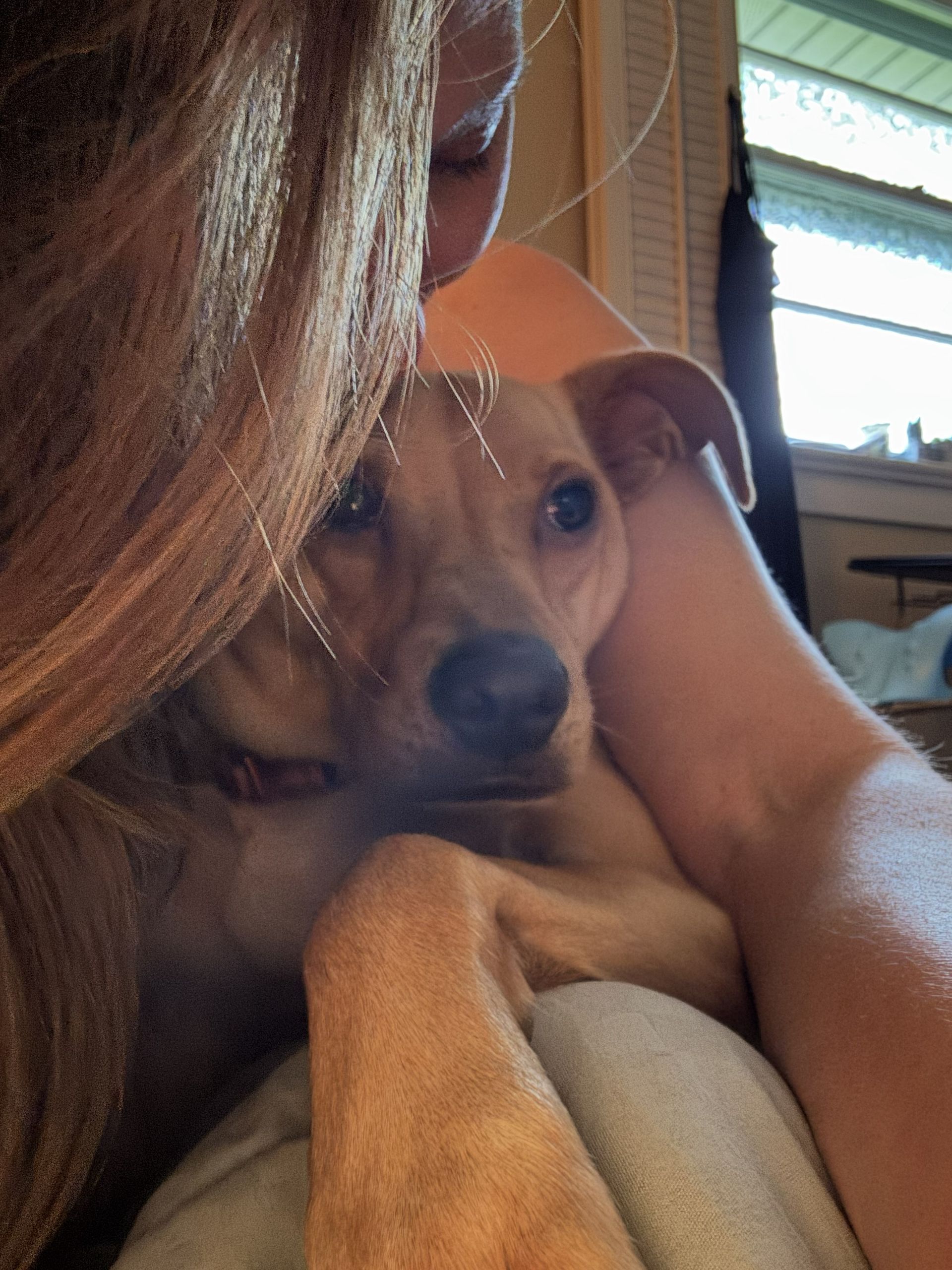
Love isn’t loud with them. It’s steady. It’s steady in the way Casner walks beside me on our morning route, like we’ve been doing it together for a lifetime. It’s steady in how Piper melts into me at night, breathing her whole day into my chest like she knows she’s safe.

Sure, there are dogs out there who are “perfectly trained” — who sit, heel, and respond like little robots, watching their owner’s every move like they’re solving a puzzle just to stay in good favor. That might look impressive, but that isn’t the kind of love I’m talking about. I’m talking about the kind of love where a dog feels free enough to relax, to stretch out, to doze off, to choose you without fear of messing up. The love that comes from being comfortable, not controlled. Real love isn’t obedience. Real love is trust, comfort, and a dog who can finally exhale.


If you ever want to really know how your dog says “I love you,” here are the signs I’ve seen over and over — with my own dogs over the years and with all the dogs who stay with us at Doggy K Care.


🐾 1. They choose your company, even when nothing special is happening


Not for food, not for treats, not because the leashes came down off the hook — just because you are their person.
If I move from my desk to the kitchen, at least three dogs follow, not because I’m doing something exciting. I might literally be wiping a counter. They just want to exist near me. And that is love.


🐾 2. They look you in the eyes, soft and unguarded

Not a stare-down. Not begging. Just a slow, gentle gaze where your dog looks at you like they’re storing up your face for later. Piper does this all the time. She’ll tilt her head just slightly, open her eyes wide, and for five seconds it feels like we’re speaking without sound.

Those little moments release oxytocin (the cuddle chemical)! So yes, your dog is basically telling you with their eyeballs that you’re family.


🐾 3. They lean their whole little body into you

Casner has this way of resting his weight against me like I’m the only sturdy thing in the world. Some dogs offer their love with presence, not kisses. When Biscuit leans his side into my leg, or Bo falls asleep on my foot, or Millie decides to nap right on my sweater — that is love shaped like trust.


🐾 4. They greet you like you’re worth celebrating

Some dogs throw a full-body parade when you walk back into the room. Some dogs just stretch, blink slowly, and wag their tail once like,
“Oh good, you’re still here.”


Both are love. Neither is better. Dogs love in their own language, and it’s always honest.


🐾 5. They bring you their toys (yes, that is a love letter)

When Piper drops her plush frog in my lap, or Zoey shows up with her cute little vampire squeaky toy like she invented it, that’s not just “let’s play.” That’s “you’re part of my happiness.” They’re sharing joy the way humans share a favorite song.


💗 Love at Doggy K Care

The dogs who stay with me don’t just get fed scrambled eggs for breakfast, leisurely walked, and tucked into my bed at night with all their favorite friends... they love, and they get loved. They sleep curled into the edges of the couch. They share their toys. They nap under my desk while I work. They learn that they are safe here.

And somewhere between the belly rubs, slow walks, silly play, and quiet naps, they say it:
They love. They trust. They relax and exist in a sanctuary for amazing humans and animals. Their comfort is an honor to me. Living creatures being happy in an environment I designed specifically for them if part of my happiness. A big part.


That is the real gift of this place — not the toys, not the treats, not the cute Puppy Suite — but the love that moves around the house like a warm current.


❤️ How to love them back

It’s simple:

  • Notice the little things.
  • Slow down enough to be present.
  • Say their name kindly.
  • Touch them gently.
  • Match their calm with your calm.
  • Let them show you who they are.
  • Make them scrambled eggs for breakfast.


Dogs don’t ask for grand gestures. They just want you to mean it. And when you do… they’ll love you in ways that steady your whole life.


🐕‍🦺 Book Loving Home Care for Your Dog in Paducah, KY

If you want your dog to stay somewhere calm, clean, and filled with genuine love (the kind that shows up slowly and stays steady), you’re welcome here. Dogs love their time here and I love giving them a staycation they will dream about the next time you have to travel!


 ✔️ Overnight boarding in my home
✔️ Daycare & playtime
✔️ Walks, cuddles, naps & peace
✔️ Small number of dogs — so every one is truly seen, and most importantly:
L O V E D
By Kasey Dirga November 11, 2025
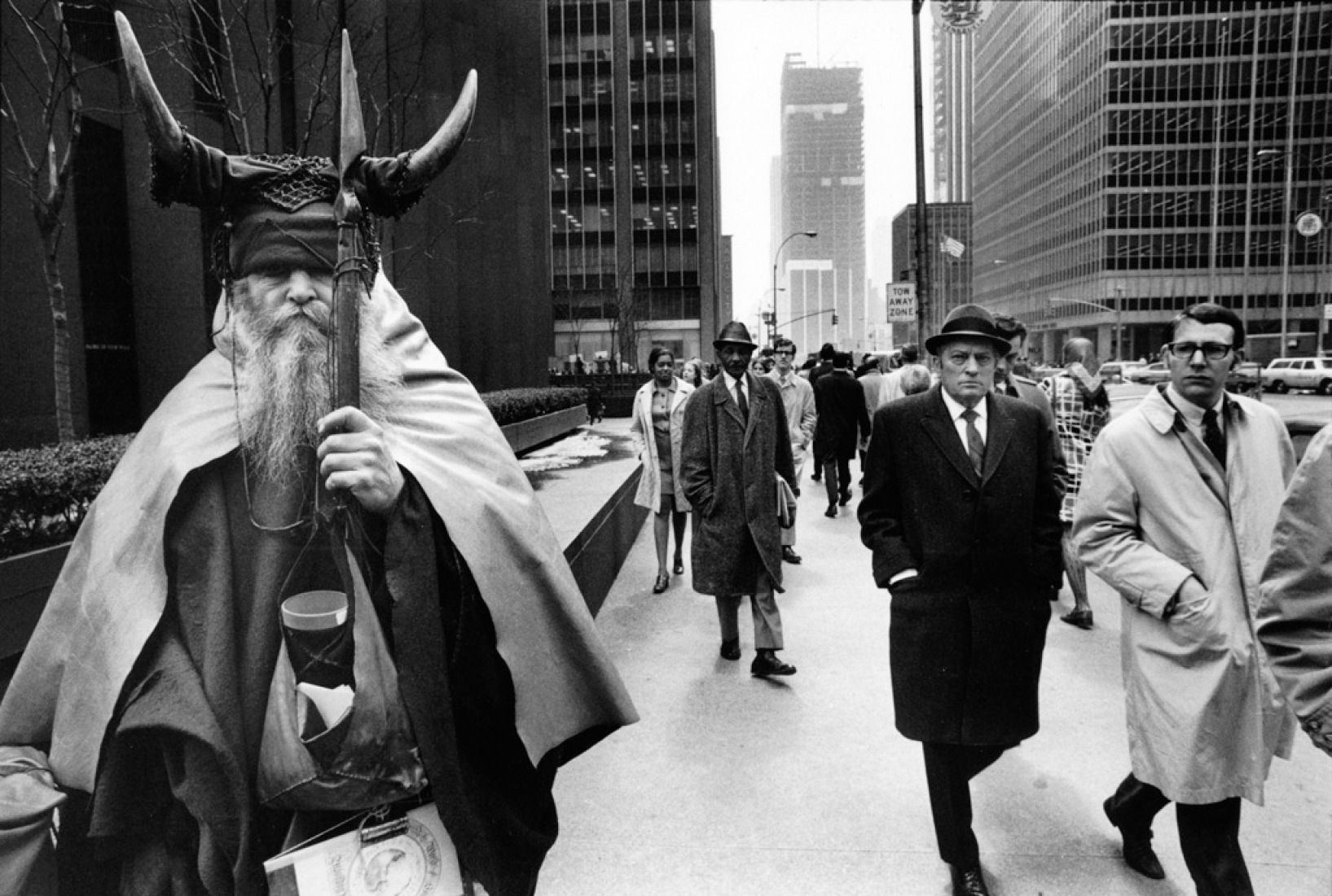
I’m grateful for the animals who have found their way into my life, for the phases of the Moon and for visionaries like Moondog, who stayed fiercely authentic.
By Kasey & Piper Dirga November 4, 2025
🛸 The Ancient Cosmic Mystery of the Word “Dog” 🐾 A Word Lover’s Preface I’ve always been a lover of words — their shapes, their sounds, and the secret histories tucked inside them. Since childhood, I’ve read the dictionary like a novel, savoring every unexpected root and hidden meaning. My paternal grandmother gifted me a very old beautiful dictionary complete with color drawings and chapters of information like an encyclopedia. She lit a fire in me to be curious about etymology and the organization of words. There’s something delicious about tracing a word back through time — like following a trail of ancient pawprints across history. Etymology, to me, is archaeology of sound — unearthing how humans have tried to capture their experiences, their gods, their pets, and their hearts through language. Some words are straightforward. Others are puzzles. And then there’s dog — a word so familiar, yet so mysterious, it might just have fallen from the stars. A Word Without a Pedigree If you think you know where dog came from… think again. Linguists, historians, and even the occasional ancient-alien enthusiast agree on one thing: nobody really knows. dog /dôɡ, dŏɡ/ noun A domesticated carnivorous mammal (Canis familiaris), bred in many varieties, long regarded as humankind’s loyal companion and guardian. (Astronomy) A bright spot appearing on one side of the Sun or Moon, caused by the refraction of light through ice crystals in the atmosphere; also called a sun dog or moon dog. (Informal, often derogatory) A contemptible or untrustworthy man; a scoundrel . The word docga (pronounced roughly DOH-jah) is Old English, and it’s the earliest known ancestor of our modern word dog. Here’s the fascinating part: Docga was a rare, late Old English word, not the usual term for a canine. The common Old English word for a dog at that time was hund, which is still seen in German “Hund” and Dutch “hond.” Scholars think docga might have originally meant a powerful breed of dog, maybe something like a mastiff or fighting dog. Its origin is unknown — it doesn’t have any clear relatives in other Germanic languages. That makes it what linguists call a “mystery root.” The word dog eventually replaced the Old English hund — by the 16th century, dog had completely taken over and even spread to other languages (French dogue, German Dogge, Danish dogge). How this scrappy little syllable muscled out centuries of Indo-European lineage remains an open question. And for bonus mystery points, even Spanish’s perro and the Slavic pas/pies have unknown origins. In other words, no one knows where anyone’s dogs came from — linguistically speaking. It’s one of those delightful linguistic puzzles that feels a bit magical — as if dog just appeared out of nowhere, wagging its tail into modern language. From Best Friend to Scoundrel By the 1200s, dog had already gone metaphorical — used as an insult for “a mean, worthless fellow, currish, sneaking scoundrel.” (And haven’t we all known a few of those?) By the 1600s, it evolved again into the playful “rake” or “gallant,” and by the 1950s, slang had promoted it to “sexually aggressive man.” These are the kinds of dogs you steer clear of — don’t fall in love with them and definitely don’t marry and have their children. The world does not need more of these weak kerov i (that’s plural for ker, which means ‘dog’ in Slavic slang ). The Dogon, the Dragon, and the Deep Unknown Now the story tilts skyward. Across the sands of Mali, the Dogon people have fascinated scholars for generations. Their ancient cosmology centers on Sirius — the brightest star in Earth’s night sky, also known as the Dog Star . Long before telescopes, Dogon traditions described invisible companion stars orbiting Sirius. Modern astronomers would later confirm that Sirius is indeed a binary system — Sirius A and Sirius B — and possibly even a trinary one. How the Dogon knew this remains one of anthropology’s great riddles. Some credit divine intuition; others whisper of ancient contact with beings from the stars — the luminous Nommo , who descended to teach humankind language, agriculture, and cosmic order. And then there’s dragon — from Greek drakōn, Latin draco, meaning serpent or great watcher. Entirely different roots, yes, but the resonance between dog, Dogon, and dragon hums in the same register: guttural, primal, ancient. Could early tongues have sensed something sacred in that sound? Something guarding the threshold between earth and sky? The Star That Started It All To the ancient Egyptians, Sirius was no ordinary star. They called it Sopdet (Greek Sothis), and its rising each year heralded the flooding of the Nile — an event symbolizing rebirth, abundance, and divine guardianship. It was the celestial reminder that light always returns after darkness. It’s easy to see why cultures across time associated this radiant star with loyalty, vigilance, and guidance — the very traits we cherish in our dogs. The same light that guided the Nile may well have inspired humanity’s image of the dog as eternal companion — guardian of the threshold, keeper of the way home. So perhaps dog isn’t just a random bark of language that stuck. Perhaps it carries a faint echo of Sirius — a syllable of starlight that still glimmers in our speech. ✨ Cosmic Conclusion At Doggy K Care , we celebrate that mystery. Whether your best friend descends from mastiffs, mutts, or Sirius itself, we speak their language — ancient, cosmic, and full of love. And as for the scoundrel ker that may have come across your doorstep like a runaway varmint? Let them chase their own tails while we bask in the light of true loyalty — the kind that greets you at the door, wags at the stars, and reminds you daily that devotion, not deceit, is the highest form of intelligence. If your pup lifts their nose to the night sky, don’t be surprised. They might just be saying hello to their ancestors among the stars. Maybe 3iAtlas is going to make contact and be a spaceship full of cosmic doggies!
Show More